
— Notes / Standard
A building is judged by what it holds, not how it opens.
The real measure of a building is whether it still holds its standard years after handover — in the junction, the material, the surface under daily use. The impression made on opening day fades. What endures, or fails to, is the verdict that matters.
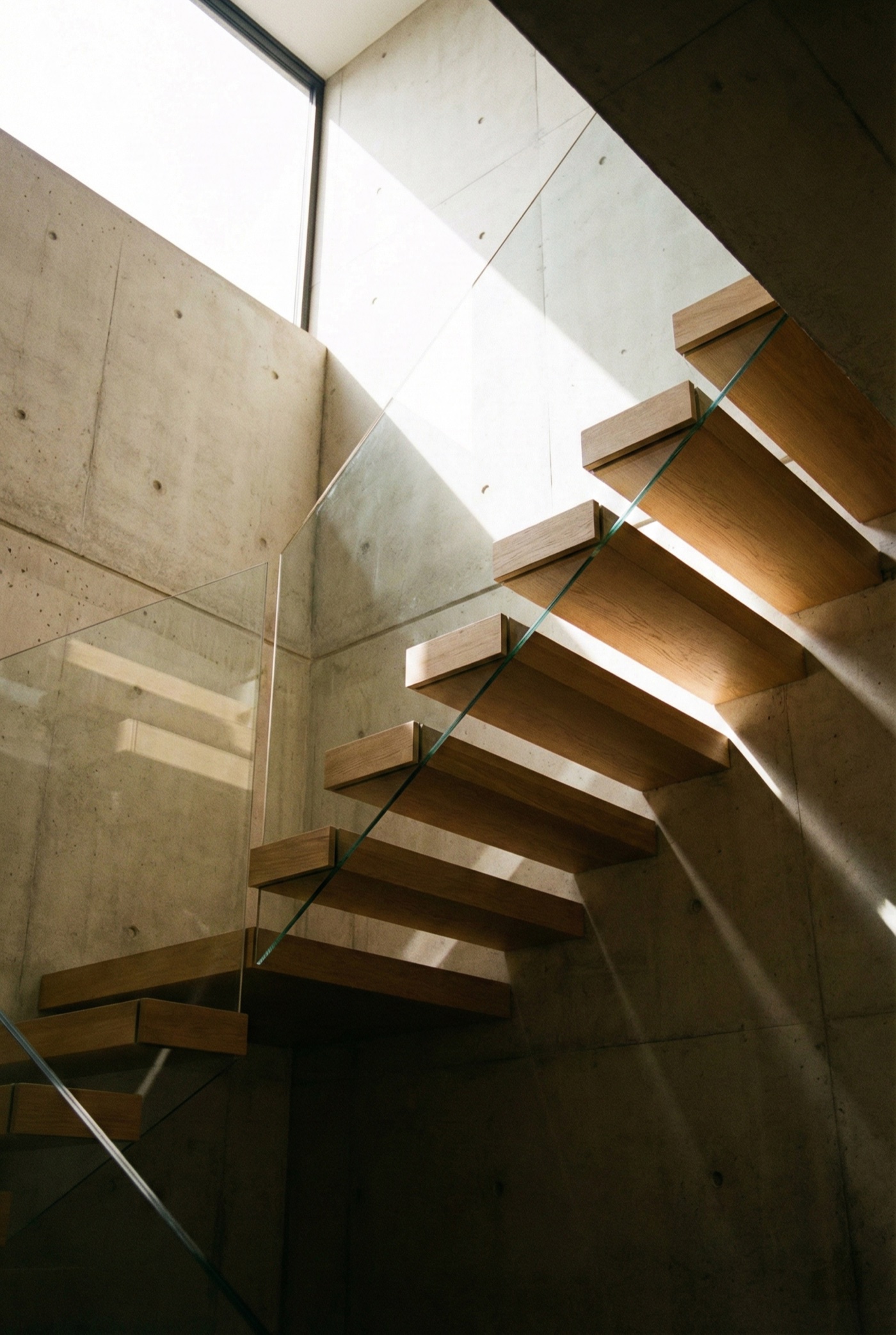
Performance fades; substance holds
A building performs once, on the day it opens. The light is staged, the surfaces are new, nothing has been asked of the structure yet. That impression is the easiest thing to engineer and the least worth trusting, because it tests presentation rather than the work.
Substance is tested differently. It is measured over years, by use, weather, and the slow accumulation of small loads on every junction. A surface that looked resolved at handover either holds its line or it does not. A material either ages into the building or fails out of it. The verdict arrives late and it is not negotiable.
So the two are not the same standard. Visual impact at completion asks how a building reads on one day. Quality that endures asks how it reads on every other day after — which is the standard a building is actually held to, by the people who live in it long after the firm has gone.
Where permanence is decided
Permanence is not added at the end. It is decided early, in choices that are made before the first load is placed and cannot be corrected once it is. The building holds what was resolved in those decisions, and nothing more.
Material comes first. A material chosen for substance rather than appearance carries the building through use instead of degrading under it. Then detailing — the way two materials meet, the way a junction is closed, the way an edge is held — because the detail is where a building is felt long after the finish, and where failure begins when the detail is loose.
Execution decides the rest. A precise drawing is only an instruction until it is built precisely; the standard lives in the work, not the specification. Each of these is resolved before construction and carried through it deliberately, so that what is built is what was decided. Permanence is the sum of those decisions, made once, correctly.
The integrated firm's role
The standard set in design only survives if nothing renegotiates it on the way to built form. That is the structural problem the integrated firm exists to remove. When design and construction are resolved as one process, the decision made in drawing is the decision built on site, because a single accountable entity is responsible for both.
Full-chain control is what lets material, detailing and execution reach built form intact. There is no handover at which detailing is reopened against a construction budget, no second party to argue the line across, no point at which substance is quietly traded for the deadline. The standard is carried through to built form, without dilution, because the firm that committed to it is the firm that builds it.
That control is also what lets the standard survive over time, not just to handover. A building resolved as one process is built to be measured against — it holds its standard under use, in the detail, years on. The benchmark is internal, and the building is the evidence. This is proof, not proclamation.
What does it mean to judge a building by what it holds?
It means measuring a building by whether it keeps its standard over time — in its material, its detailing and its junctions under daily use — rather than by the impression it makes at handover. The opening-day reading tests presentation. What a building holds years later tests the work. BOWCON treats the second as the real verdict, because it is the one the people who live in the building return on every day.
Why does an integrated design-and-construction firm hold its standard better?
Because the standard is never handed across a gap where it can be renegotiated. When one firm controls design and construction as a single process, material, detailing and execution are resolved together and carried through to built form without dilution. There is no second appointment at which ambition is value-engineered downward. The standard set in design is the standard the building keeps, and the building is left as the proof.
- BOWCON, Adelaide